

Clonliffe College
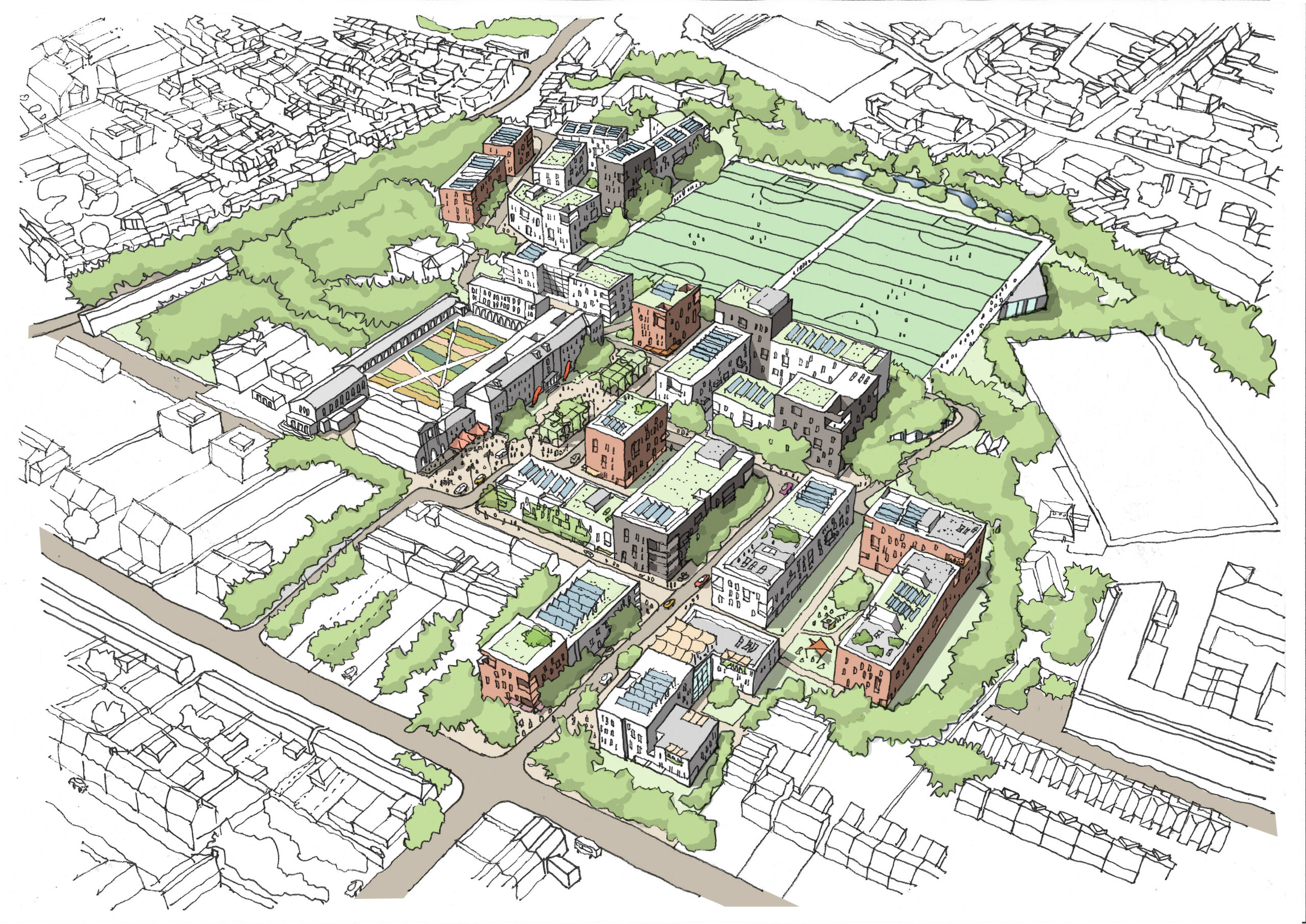
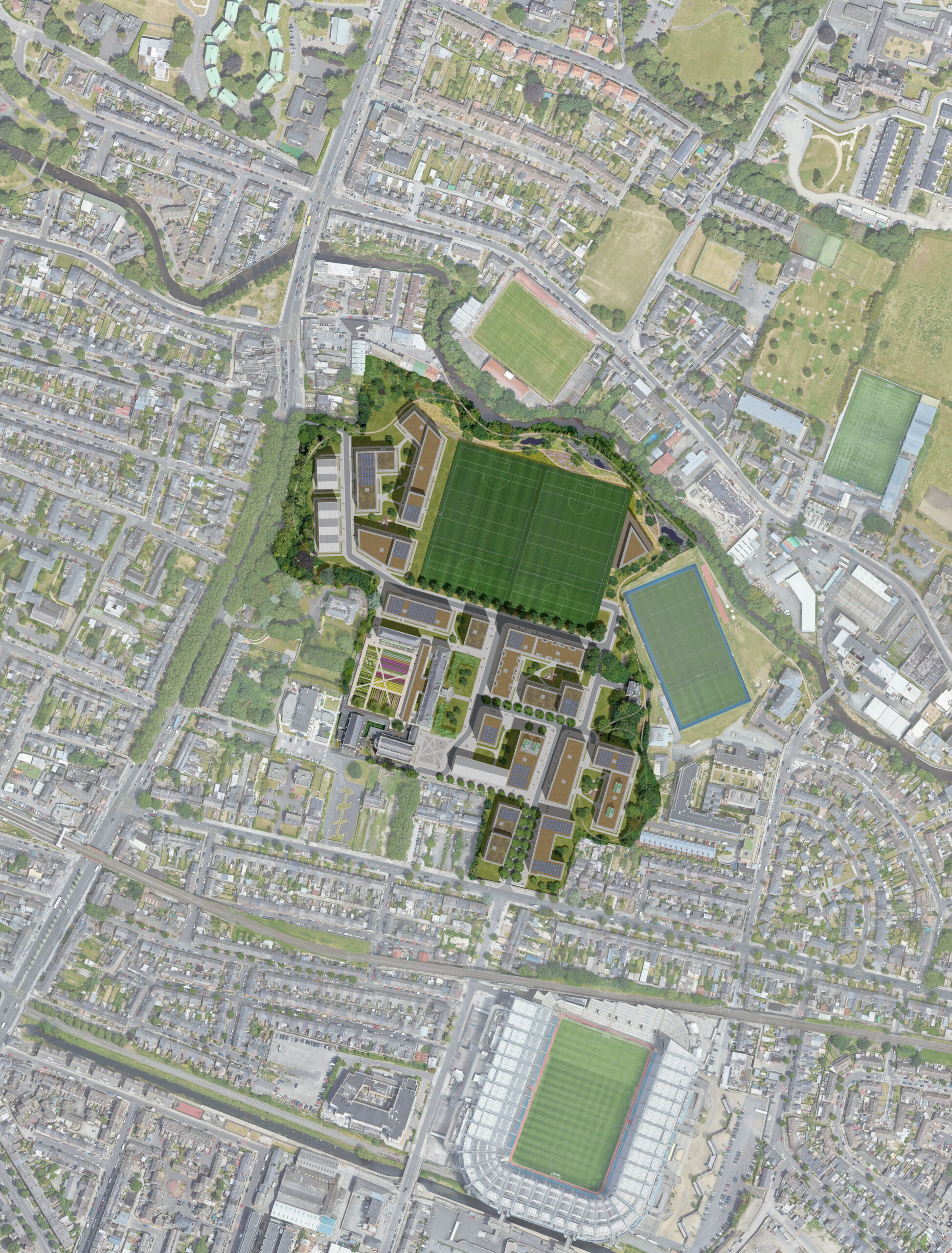
The Clonliffe project proposed the transformation of a significant inner-city site in Dublin 3 into a mixed-use residential neighbourhood organised around landscape, community and heritage. The 8.3-hectare masterplan accommodates approximately 1,500 residential units together with retail units, community facilities, student accommodation and later life living, establishing a balanced and inclusive urban programme.
Located on the former Clonliffe College estate, the proposal introduced a contemporary urban quarter that acknowledged the ecclesiastical buildings, mature trees and historic structures that characterise the site. New streets, public spaces and building typologies were arranged to integrate the development into the existing city and to frame a series of social and landscape settings. A strong emphasis was placed on social diversity, providing a mix of household types and tenures that would enable residents of different ages and incomes to live within the same neighbourhood.
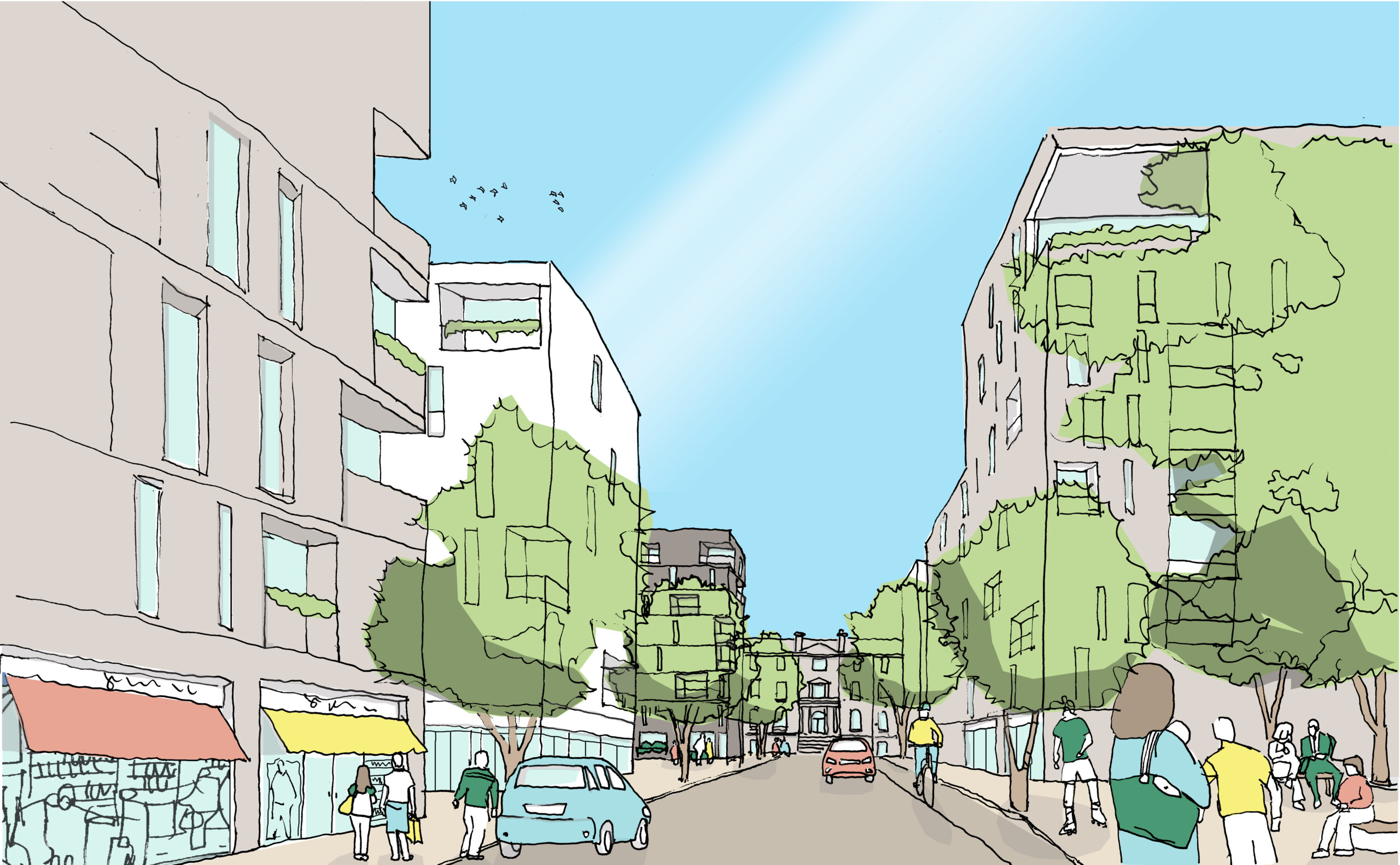
Movement and permeability were prioritised through a network of streets, lanes and shared surfaces designed to encourage walking, improve connectivity and support everyday social exchange. Landscape and ecology formed the basis of the public realm strategy, drawing on the site’s legacy of horticulture and farming to enhance biodiversity and create accessible green spaces for residents and visitors.
Taken together, the masterplan aimed to establish a welcoming neighbourhood that celebrated the memories and physical character of the site while integrating itself positively into the evolving urban fabric of north Dublin.
Services :
Masterplanning
Client:
Undisclosed
Location:
Dublin 3
Size :
8.3ha
Year :
2019